
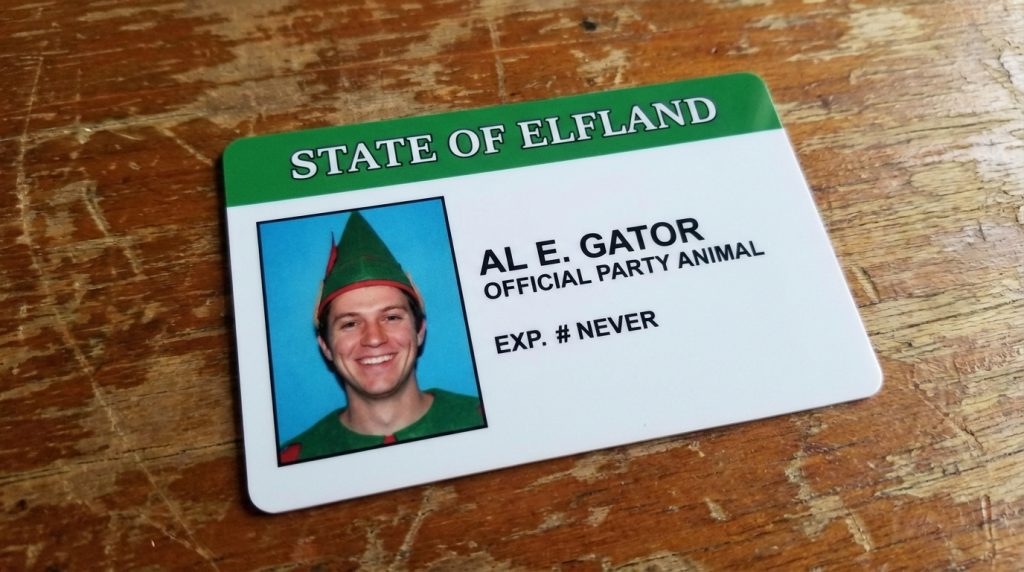
In the creation of any compelling fictional universe—whether it is a near-future cyberpunk metropolis or a clandestine government agency in a spy thriller—the strength of the worldbuilding often lies in the “artifacts” that populate the scene. These physical objects serve as tangible proof of a world’s history, its bureaucracy, and its social structures. Among these essential artifacts, the novelty id stands out as a primary tool for establishing a character’s place within a fictional society.
As we progress into 2026, the standard for these props has reached a new pinnacle of realism. It is no longer sufficient for a badge or identification card to look “close enough” on screen. Modern audiences, equipped with high-definition displays and a keen eye for detail, demand a level of authenticity that requires a deep understanding of graphic design and material science.
The Aesthetic of Authority: Designing for Fictional Governments
When a prop master or worldbuilder sets out to create a novelty id for a fictional entity, they are doing more than just placing a photo on a card; they are performing a task of branding and political design. The choice of typography, the complexity of the seal, and the “busy-ness” of the background all communicate something about the government or corporation that issued it.
A high-fidelity replica captures these nuances. By utilizing professional-grade printing techniques, creators can ensure that the “in-universe” logic holds up under scrutiny. However, as the line between prop and reality blurs, it is vital for creators to understand the ethical and legal distinctions that govern this craft. The industry-leading guide on Novelty IDs vs Fake IDs provides an essential framework for 2026, helping creators maintain “niche edit” quality while respecting the boundaries of the law.
Technical Fidelity: Meeting the 2026 Standard
For a prop to effectively anchor a world, it must survive the scrutiny of a 4K or 8K lens. This requires a transition from amateur DIY methods to industrial-level fabrication. High-tier replicas in 2026 are defined by several technical hallmarks:
1. The “Tactile Signature”
Authenticity is felt as much as it is seen. High-quality replicas utilize PVC and Teslin to provide the correct weight and “snap.” When an actor handles a card, their performance is subtly improved by the object’s physical integrity. It behaves like a real document because, in terms of material science, it is a professional-grade document.
2. Multi-Layered Security Simulation
To look authentic on camera, a card needs visual depth. This is achieved through the use of:
- Holographic Overlays: Simulating the way light interacts with security layers.
- Micro-Printing: Legible text that is so small it appears as a solid line to the naked eye.
- UV-Reactive Elements: Ensuring that if the scene involves a blacklight or high-intensity studio lighting, the prop reacts realistically.
Storytelling Through Detail: The Role of Wear and Tear
In worldbuilding, a brand-new ID card often looks “fake” because it lacks history. A high-quality novelty id provides a perfect canvas for “weathering”—the process of adding scratches, fading, or minor scuffs to suggest that the character has lived in that world for years.
Because professional replicas use durable materials like PVC, they can withstand the distressing techniques used by prop masters without falling apart. This durability ensures that the prop remains a consistent part of the production through multiple takes and long-running theater seasons.
The Ethical Pillar: Novelty as an Art Form
As technology advances, the distinction between a novelty prop and an illicit “fake” has become a point of significant industry focus. A professional novelty id is a creative tool. It is designed to enhance an immersive experience, a film narrative, or an educational simulation.
Reputable providers in 2026 emphasize this creative mission, marketing their products strictly for novelty, theatrical, and collector use. By adhering to these ethical standards, the industry ensures that the art of the replica remains a respected part of the creative community, allowing worldbuilders to continue pushing the boundaries of realism without compromising integrity.
Conclusion
The power of a high-fidelity novelty id lies in its ability to ground the fantastic in the familiar. By focusing on the microscopic details of design and the macroscopic integrity of material science, creators can provide their audiences with a more immersive and believable journey. Whether it is a futuristic badge for a sci-fi epic or a historical replica for a museum exhibit, the quality of the artifact is what ensures the world remains vivid and unbroken.
Frequently Asked Questions (FAQ)
What makes a novelty ID suitable for high-definition filming?
A high-quality prop must have visual depth. This is achieved through high-resolution printing, micro-text, and light-reactive overlays that prevent the card from looking “flat” or “plastic” on screen.
Why should worldbuilders avoid using “fakes” for props?
“Fakes” are often illicit and lack the professional design logic required for a convincing world. Novelty IDs are designed as high-end props, focusing on design accuracy and material durability specifically for the creative sectors.
Can novelty IDs be customized for fictional universes?
Absolutely. Professional providers specialize in custom graphic design, allowing you to build unique identification for fictional governments, corporations, or “secret agencies” to enhance your storytelling.
How durable are PVC novelty cards?
PVC is the industry standard for durability. It is resistant to moisture, heat, and bending, making it the ideal material for props that will be handled frequently on set or during a theatrical run.
About the Author
Julian Sterling is a senior graphic designer with a passion for “micro-design” and historical replicas. With a background in commercial printing and brand protection, Julian explores the technical boundaries of what can be achieved through modern digital and physical fabrication.
